
F1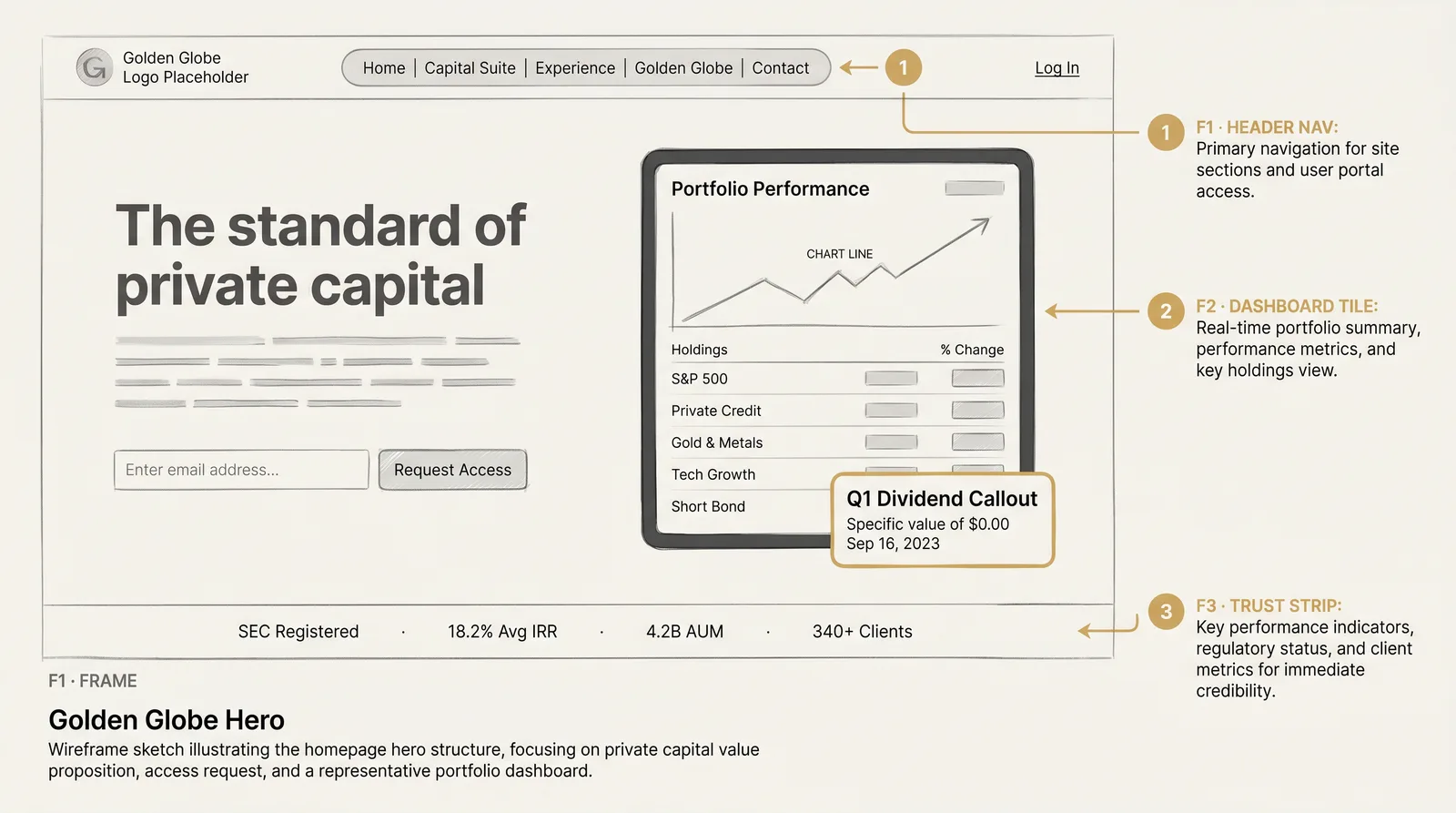
F1 · Frame
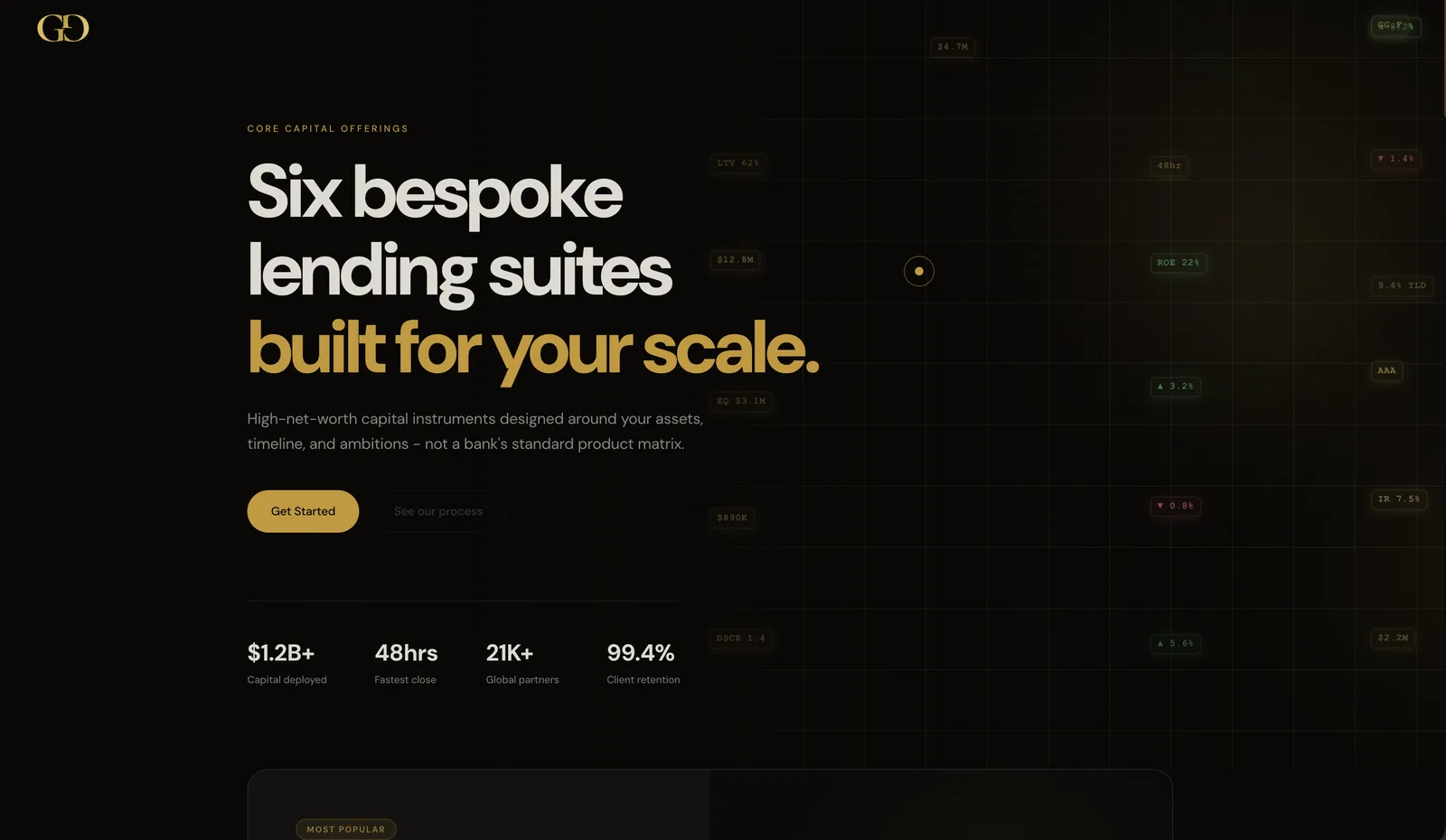
Public Website Structure
A premium 11-page website structure designed to communicate credibility, services, process, and private capital positioning.

Introducing Orbyte, a full platform built to help businesses scale and launch custom AI automations.
Fintech Product Design Case Study
Designing a luxury private lending platform with secure dashboard workflows and high-trust client experiences.
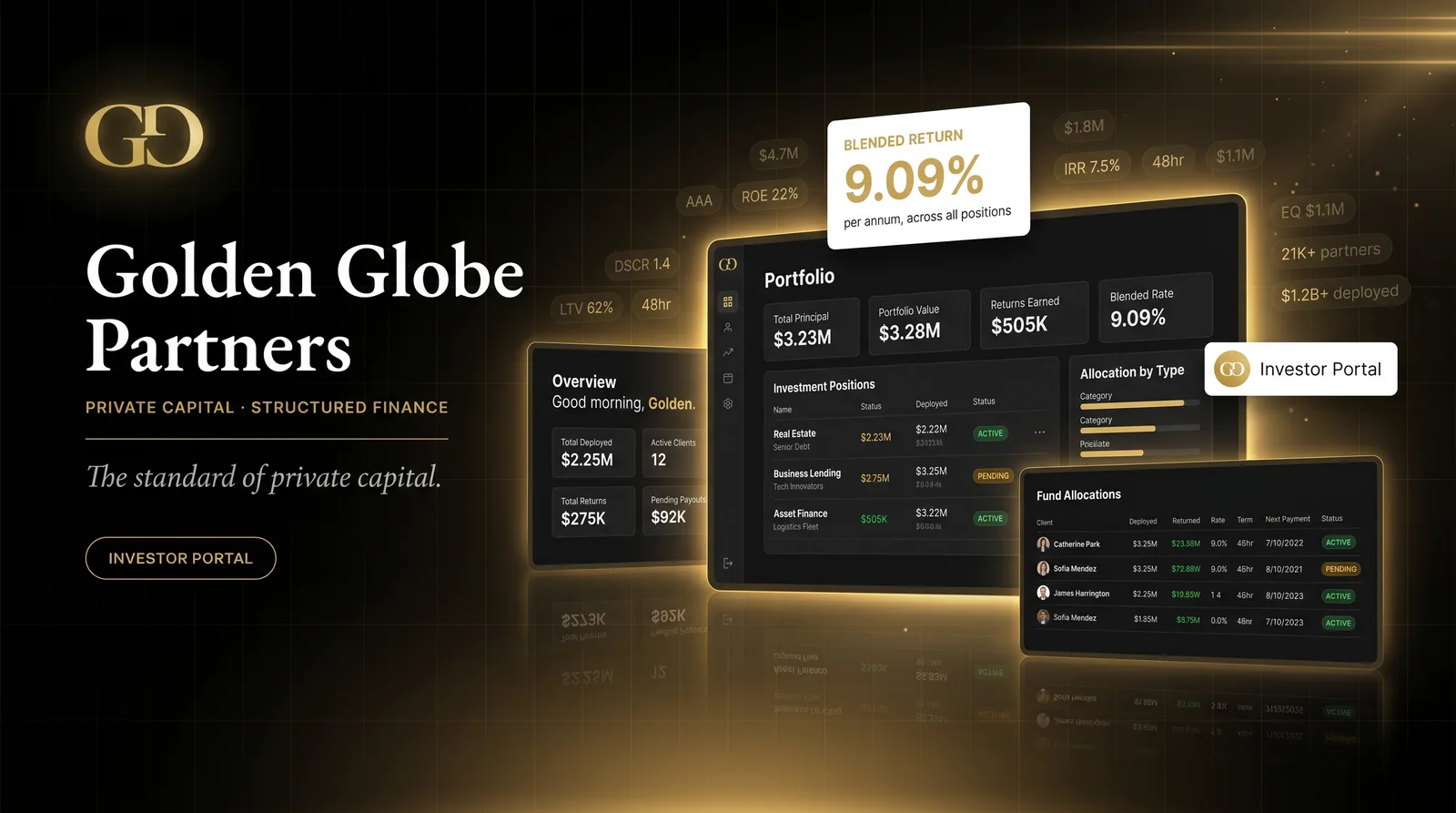
Golden Globe Partners was designed as a premium private lending platform for structured capital, client inquiries, dashboard visibility, and CRM-style relationship management. The experience needed to feel institutional, polished, and trustworthy while making complex private lending workflows easier to understand.
Role
Product Designer / Founder
Focus
Financial UX, private lending, dashboard design, CRM workflows
Platform
11-page website / client portal direction / custom dashboard
System
Website, dashboard, inquiry flow, CRM workflow, financial visibility
Status
Portfolio project / platform build direction
Platform preview
Why this project matters
Private lending experiences require more than polished visuals. Users need to understand the offering, trust the company, submit inquiries with confidence, and eventually interact with sensitive financial information through clear dashboard workflows. Golden Globe Partners was designed around a simple product question: how can a private capital platform feel premium, credible, and operationally useful at the same time?
Financial users need confidence before submitting information, exploring lending options, or interacting with private capital workflows.
Private lending, structured capital, document status, and account visibility can feel complex without a clear interface and guided journey.
Website inquiries, client onboarding, financial status, CRM notes, documents, and follow-up activity need to connect into one organized platform direction.
User and use case
Primary Users
User goal
Understand the lending offer, submit an inquiry, move through onboarding, view relevant financial and status information, and support ongoing relationship management through a clear dashboard workflow.
Pain Points
Design principle
The interface should build trust before asking for action, then support clear status visibility, secure workflows, and organized relationship management after the user becomes a client.
The core workflow
The workflow was designed to move users from trust to understanding to action, while giving internal teams a stronger foundation for managing private lending relationships.
UX challenge
Problem statement
Financial platforms can quickly become either too generic or too complicated. A private lending experience needs to feel credible and high-end, but it also needs to explain the offering clearly, guide users into the right action, and support operational workflows after the initial inquiry.
Design goal
Create an experience that helps users answer:
“High-trust financial UX is not just about looking premium. It is about making every step feel clear, controlled, and credible.”
Wireframe story
Drag through the six wireframe frames that defined the platform flow: public site · inquiry · portal entry · dashboard · CRM record · document workflow.
F1 · Frame
A premium 11-page website structure designed to communicate credibility, services, process, and private capital positioning.

F2 · Frame
A guided intake experience that helps users submit relevant information without feeling overwhelmed.

F3 · Frame
A secure login and dashboard entry concept for users moving from inquiry to client relationship.

F4 · Frame
A dashboard direction for account visibility, status, lending workflow context, and key client information.

F5 · Frame
An internal relationship management view for notes, stages, client details, follow-ups, and activity history.

F6 · Frame
A structured workflow for organizing document requests, status updates, payment or account-related visibility, and operational next steps.
Final product experience
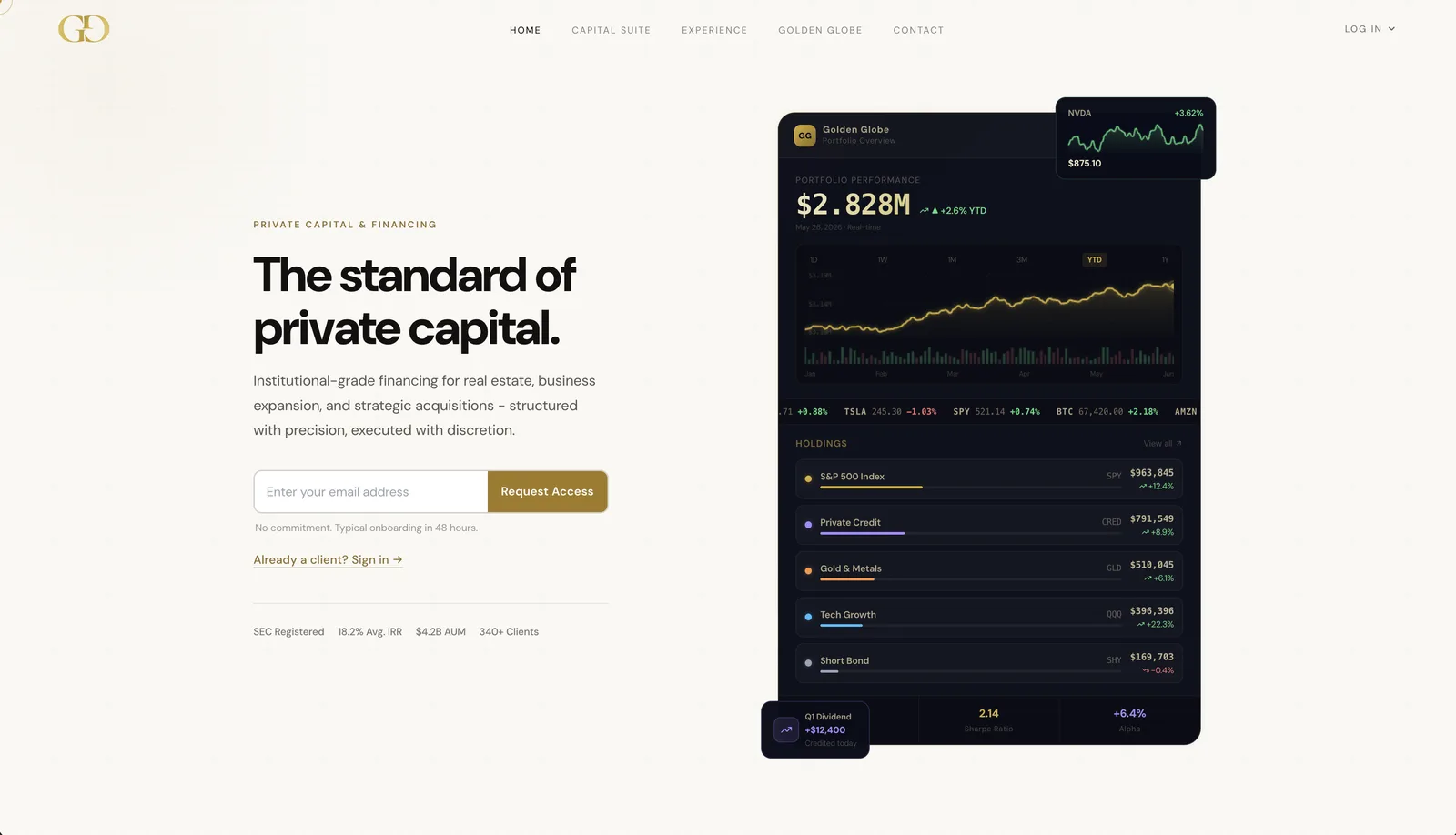
Marketing site
Platform surfaces
Overview is the daily-pulse home for the founder. Portfolio is the investor-facing read on deployed capital and blended return. Fund Allocations is the internal CRM view that ties clients to active positions, status, and next payment.

Overview · daily pulse

Portfolio · investor read

Fund Allocations · internal CRM
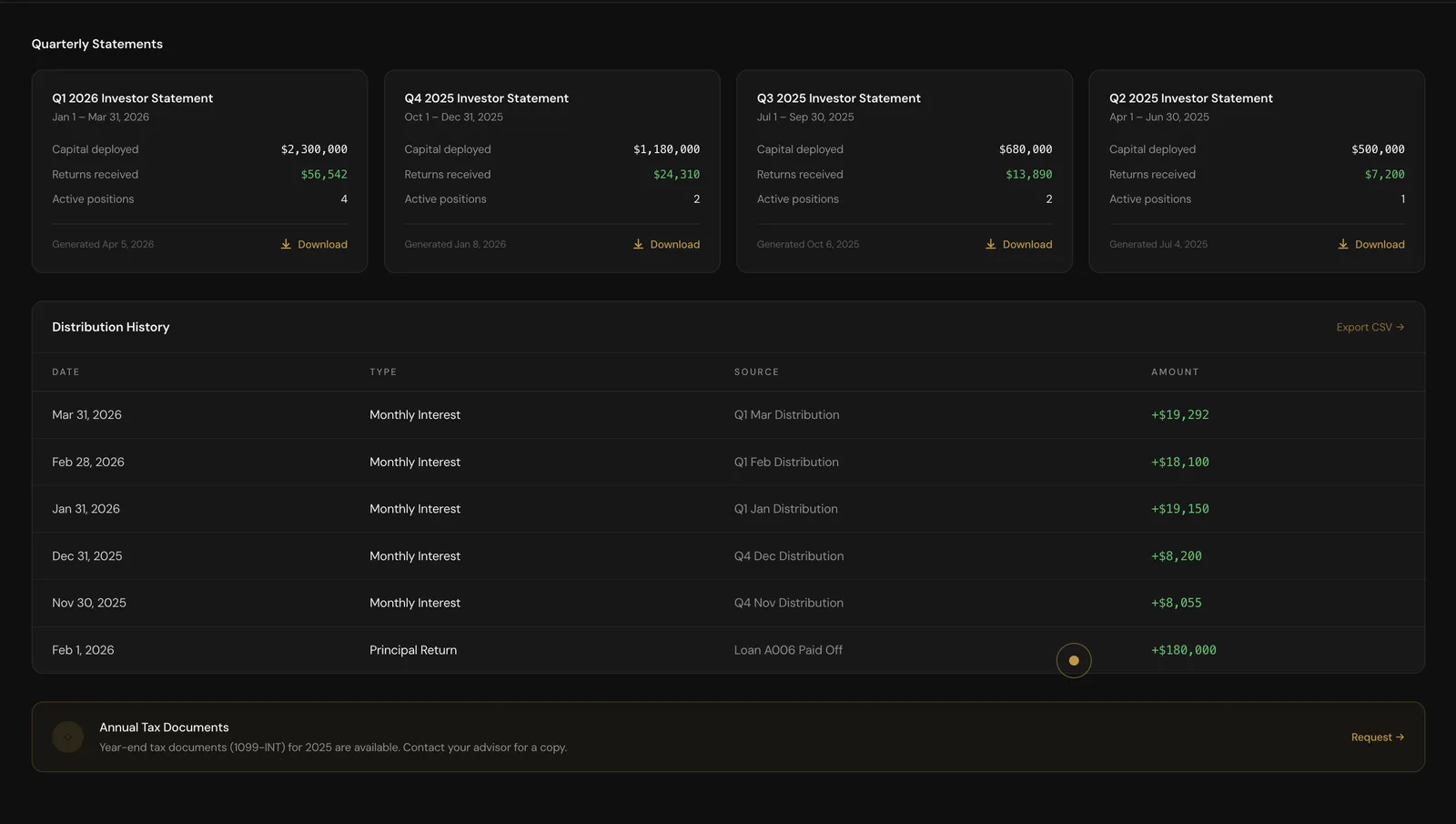
Trust and workflow layer
The product design layer was built around trust, clarity, and operational flow. Instead of treating the project as only a website, the experience connected brand storytelling, inquiry capture, dashboard direction, and CRM-style management into one larger private lending platform concept.
The public-facing experience builds confidence before asking users to share sensitive information or start an inquiry.
The dashboard direction organizes financial visibility, status, documents, and client workflow context into a cleaner interface.
Internal teams can manage client relationships, follow-up stages, notes, and activity in a more structured system.
“The goal was not just to create a luxury finance website. The goal was to design a platform experience that made private lending feel clearer, safer, and more organized.”
Future AI opportunities
Framed as opportunities, not shipped features. Each direction is where AI could strengthen client intake, document tracking, CRM follow-up, and search across financial records without replacing human review.
Design decisions
Before and after
Before
After
Relevance to high-trust product design
Golden Globe Partners is more than a luxury website case study. It is a high-trust product experience designed around private capital, client intake, dashboard visibility, and relationship management. The same design principles apply to any product where users need clarity, trust, and confidence before making important decisions.
This type of workflow thinking is relevant for products that rely on

Reflection
The biggest lesson from Golden Globe Partners is that premium product design has to do more than look impressive. It has to make the user feel confident, guide them through complex decisions, and support the operational workflow behind the brand. For financial and private capital products, trust is created through clarity, restraint, hierarchy, and consistent system design.
Users need credibility, clarity, and confidence before they share information or start a financial workflow.
A strong dashboard helps users understand status, context, and next steps without overwhelming them.
The best private capital experiences combine brand polish with real workflow structure.
Designed for private capital confidence
Golden Globe Partners represents the kind of product work I enjoy most: premium brand systems, financial UX, dashboard thinking, CRM workflows, and digital experiences that turn complex business processes into clear user journeys.